Local SEO · guide
Local SEO tips for a small business, in the order that works
Written from client work rather than from a content calendar. What to fix first, what to skip, and roughly how long any of it takes — for owners who have a business to run and about an hour a week for this.
If you have never done any of this, start here and do the four steps in order. Each one takes an afternoon or less, none of them costs anything, and the first one usually produces something within weeks. You do not need a budget and you do not need an agency to begin.
Start where the decision is actually made
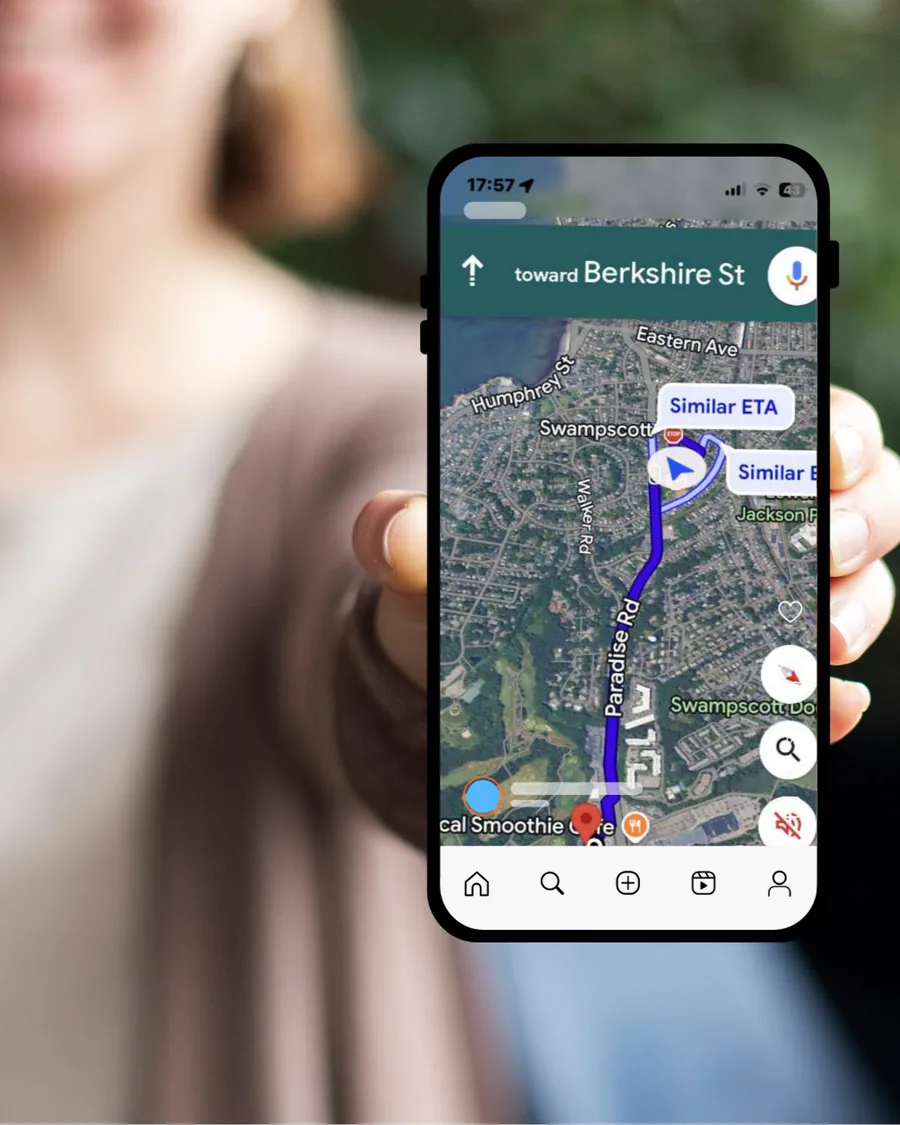
Someone in your town picks up a phone and searches for what you sell. Three businesses appear on a map, with photos, hours and reviews. They tap one and call.
Your website was never part of that. The map was.
So the listing matters enormously. But it is the second job, not the first — because everything it does is send someone to your website. Get the site and the service pages right, then set the listing to point at them. A listing that sends people to a page which cannot answer them wastes the visit it just earned.
What Google actually weighs
Google says it ranks local results on three things: relevance, distance and prominence.
Distance you cannot change. You are where you are.
Relevance is how well your business matches what was typed. That is category settings, services listed, and whether your pages say what you actually do in the words a customer would use.
Prominence is how well known you are — reviews, mentions, links, an active profile. It is the slowest to build and the hardest to fake.
Two of three are within your control. That is the whole job.
Step one: the Google Business Profile
Search your own business name in a browser you are not signed into. If nothing appears on the right side of the results, or on the map, that is the first problem and everything else can wait.
Get the category right
Your primary category decides which searches you are eligible for at all. Not how well you rank in them — whether you appear at all. Most profiles were set years ago to something too broad and never revisited.
Pick the most specific category that genuinely describes you. A general dentist and a cosmetic dentist are different categories and different searches. Add secondary categories for the other things you really do, and nothing you do not.
Fill in everything, including the parts nobody fills in
Hours, including holiday hours. Services, each one listed separately. Attributes. The description. Every empty field is a question Google cannot answer about you, and a question a customer has to ask instead of booking.
Add photos, then keep adding them
Profiles with current photos get engaged with more than profiles with three pictures from years ago. They do not need to be beautiful. The actual place, the actual work, the actual people is what gets looked at.
Answer the questions section
Anyone can answer a question on your profile. Including a competitor, and including someone who is simply wrong. Post the questions you get asked most and answer them yourself before somebody else does.
Post to it
Almost no small business posts to their Google profile. It takes a few minutes, it keeps the listing active, and it is one of the few places where doing the ordinary thing puts you ahead of nearly everyone in your town.
If customers do not come to you
A plumber, a consultant, a mobile groomer — anyone who travels to the customer — sets a service area instead of publishing an address. Google supports this properly, and hiding the address does not hurt the ranking.
What it does change is proximity. A storefront ranks strongest near its own door. A service-area business ranks across the area it declares, which means the area has to be declared accurately rather than optimistically. Claiming the whole state when you work in four towns weakens all four.
Step two: the website, one page at a time
Once the listing is right, the website has to hold up whoever it sends over.
One page per thing you sell
A single "Services" page listing six things competes for none of them properly. Google cannot tell what the page is about, so it ranks it for nothing in particular. Six pages, each about one service, each with its own title, will always beat one page trying to be all of them.
That is the structural fix and it is usually the biggest one available. It is also why we build sites one page per service by default.
Name your towns
If your pages never say the names of the places you serve, they cannot rank for them. "Serving the greater area" ranks for nothing, because nobody types that.
Write the towns. Not stuffed into a list at the bottom — in the sentences, where they belong. If you serve Beverly, Lynn and Salem, those words should appear on the page naturally, because that is what a customer typed.
Then write the title as if a person will read it
This is where most local sites quietly fail, and it is worth its own paragraph.
You can rank first and get nothing. We found this on our own site before we found it on a client's: several searches where we sat at position one, hundreds of impressions, and zero clicks. The pages ranked. Nobody clicked them.
The reason was the title. It did not contain the name of the town the searcher had typed. Someone searching for a service in Beverly scans the results for something that looks local, and a title that says "Digital Marketing Services" while the searcher typed "Beverly" reads as one more national company.
Put the geography in the title. It is the cheapest fix in local SEO and one of the largest.
Local SEO is mostly mobile SEO
Most local searches happen on a phone, usually within a few minutes of someone needing something. That changes what matters.
The phone is where the map appears
On a desktop the map results share the screen with organic links. On a phone they fill it. A searcher may never scroll past them, which is why the Google listing outranks the website in importance for anything local.
Tap targets and phone numbers
A phone number that is not tappable is a phone number that does not get called. The same goes for an address that does not open a map, or a form field too small to hit with a thumb. These are not ranking factors — they are the reason a ranking turns into a customer or does not.
Speed on a phone connection, not on your laptop
Test the site on mobile data, away from your own wifi. PageSpeed Insights is free and reports mobile separately from desktop for exactly this reason. The threshold Google measures against is two and a half seconds to the largest element on the screen. Most small business sites built on a page builder do not reach it.
What a phone visitor is actually doing
Checking you are open. Checking where you are. Checking whether anyone has reviewed you. Deciding whether to call. A page that buries the hours, the address and the phone number below a large photo is answering none of those questions in the order they are asked.
Step three: reviews, and what to do about them
Reviews are prominence, and prominence is the part you cannot shortcut.
Ask at the right moment. Not by email a week later. Ask when the person is standing in front of you and visibly pleased. That is the only moment with a decent success rate.
Make it one tap. Google gives every profile a short review link. Put it in a text message. Anything longer than one tap loses most people.
Reply to all of them. Including the difficult ones, especially the difficult ones. A calm reply to an unfair review is read by every customer who comes after, and it does more for you than the review did against you.
Never buy them. Google is good at spotting purchased reviews, the penalty is severe, and getting a profile reinstated is a slower job than earning the reviews would have been.
Step four: everywhere else your name appears
Google confirms a business exists by finding it described consistently in several places. Directories, industry lists, the chamber of commerce, supplier pages. Each one is a small piece of corroboration.
Consistency matters more than quantity. The same business name, the same phone number, the same address or service area, on every one of them. A business listed three ways in four places looks less certain than one listed the same way twice.
Start with the obvious ones. Apple Maps, Bing Places, Yelp, Facebook, and whatever directory your trade actually uses. Those four plus one specialist listing beat fifty generic submissions.
Ignore anyone selling a hundred citations. Most are on sites nobody visits, and some are on sites Google actively distrusts. A small number of real ones is worth more.
What to skip
Plenty of local SEO advice is technically true and practically useless for a business with limited time.
Citation blasts. Services that submit your details to hundreds of directories. A handful of real ones matter; the rest are noise, and inconsistent details across them actively hurt.
Chasing keyword volume. A term with a hundred searches you can win beats one with ten thousand you cannot. On the North Shore, several genuinely useful search terms have almost no competition at all.
Blogging for its own sake. Twenty thin articles do less than one page that properly answers what your customers ask before they book.
Anything promising rankings in thirty days. That is not how any of this works, and the methods that appear to deliver it are the ones that get profiles suspended.
How long it takes
Honestly: the profile work can produce an enquiry within weeks. The search side takes months.
On one client — a practice starting from a brand-new website — the first client arrived inside six weeks, because a working site and correct listings move quickly. The search curve did not lift at all for nearly two months after that, then climbed steadily for the rest of the year. Twelve months in, that site had 1,180 clicks and 483 keywords ranking in first place, from nothing.
That is the normal shape. Slow, then compounding. The full numbers are published, including one where the results went sideways for months because the platform underneath the site was the ceiling.
If someone tells you it is faster than that, they are describing something other than SEO.
What it looks like once it is set up
Local SEO is not a project that finishes. The listing is a page Google re-ranks against every competitor in your area, every day, and the businesses that hold position are the ones that keep feeding it.
Monthly: check the questions section, add a few photos, post once, reply to any new review, and glance at Search Console for terms you are appearing for that you did not expect.
Quarterly: check that your listing information still matches your website, look at what the businesses above you have changed, and add a page for anything you have started selling since.
That is thirty minutes a month. It is less than most owners spend deciding whether to hire someone.
If you only do three things
Put the name of your town in the title of every page. Give each service its own page instead of one page listing all of them. Then set your Google Business Profile category and services to match what those pages now say.
Those three cost nothing and will move more than most of what an agency would charge you for in the first month.
When you want the rest of it done properly, that is what we do — or read more about profile management and local SEO in Massachusetts.